Leasing a luxury SUV can feel like throwing money away.
After three years of monthly payments, you return the vehicle and walk away without owning anything.
Buying seems like the smarter financial decision because you eventually own the car.
But there’s a problem with that logic.
Luxury vehicles can depreciate rapidly, and ownership comes with financing costs, maintenance expenses, and the risk of unexpected changes in resale value.
Meanwhile, leasing allows drivers to use a new vehicle for a fixed period without taking on the same long-term resale risk.
So which option actually costs more?
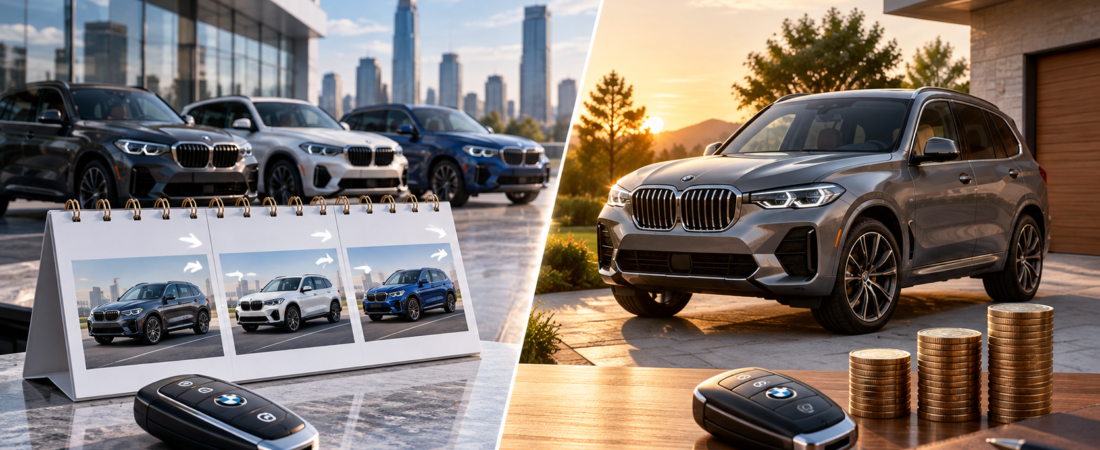
In this luxury car lease vs buy comparison, we’ll examine what happens when someone leases two luxury SUVs over six years versus purchasing one $80,000 SUV and keeping it for the same period.
We’ll calculate total payments, financing costs, depreciation, residual value, and the real cost of driving.
The goal isn’t to declare leasing or buying universally better.
It’s to identify the circumstances where each option makes financial sense.
Quick Verdict: Buying and keeping a luxury SUV for six years often costs less than leasing two new luxury SUVs over the same period. However, leasing can be attractive for drivers who want a new vehicle every three years and prefer predictable ownership periods.
Comparison Outline
- Luxury car lease vs buy: Quick comparison
- Why monthly payments can be misleading
- Our $80,000 luxury SUV scenario
- Six-year cost of buying
- Six-year cost of leasing twice
- The real cost comparison
- Depreciation and residual value risk
- Maintenance, warranty, and unexpected expenses
- What if you change cars every three years?
- When does leasing become the better choice?
- Frequently asked questions
- The Compareason Verdict
1. Luxury Car Lease vs Buy: Quick Comparison
Leasing and financing are two different ways to pay for vehicle use.
When you finance a vehicle, your payments gradually build ownership equity.
When you lease, your payments primarily cover the vehicle’s expected depreciation during the lease term, plus financing charges, fees, and applicable taxes.
| Factor | Leasing | Buying With Financing |
|---|---|---|
| Typical contract | 24–48 months | 48–84 months |
| Monthly payments | Often lower | Often higher |
| Vehicle ownership | No, unless purchased later | Yes, subject to loan payoff |
| Mileage restrictions | Usually yes | No contractual mileage limit |
| Wear-and-tear charges | Possible at return | No lease-return charges |
| Depreciation risk | Mostly reflected in lease terms | Owner bears resale-value risk |
| Ability to customize | Restricted | Greater freedom |
| Long-term flexibility | Limited by contract | Can keep or sell vehicle |
| Best suited for | Frequent vehicle upgrades | Longer ownership periods |
The most important difference isn’t the monthly payment.
It’s what happens at the end of the agreement.
A buyer may own a valuable vehicle after the loan is paid.
A lessee typically returns the vehicle and must arrange another vehicle.
That difference becomes especially important over six years.
2. Why Monthly Payments Can Be Misleading
Imagine two advertisements for the same luxury SUV.
Lease offer:
$899 per month for 36 months.
Finance offer:
$1,250 per month for 72 months.
At first glance, leasing appears significantly cheaper.
The monthly difference is $351.
Over three years, that represents $12,636 in lower monthly payments.
But the comparison is incomplete.
The lease may require a substantial amount due at signing.
It may also include mileage restrictions and end-of-lease fees.
The financed vehicle, meanwhile, retains resale value.
After six years, the buyer may own a vehicle worth tens of thousands of dollars.
The lessee may have paid for two vehicles without owning either one.
The Correct Comparison
Instead of comparing monthly payments, calculate:
Buying cost = Down payment + Loan payments + Ownership expenses − Vehicle resale value
Leasing cost = Upfront payments + Lease payments + Lease-related fees + Operating expenses
These formulas must also account for any remaining loan balance, taxes, and differences in expenses when applicable.
For a fair comparison, the same cost categories should be included in both scenarios.
The Compareason Insight: A lower monthly payment does not necessarily mean a lower total cost.
3. Our $80,000 Luxury SUV Scenario
Let’s compare two hypothetical ownership strategies.
Option A: Buy One Luxury SUV
The buyer purchases an $80,000 luxury SUV and keeps it for six years.
Assumptions:
- Vehicle price: $80,000
- Down payment: $10,000
- Amount financed: $70,000
- Loan term: 72 months
- APR: 6.5%
- Ownership period: 6 years
- Estimated resale value after six years: $30,000
Option B: Lease Two Luxury SUVs
The driver leases a new $80,000 luxury SUV every three years.
Assumptions for each lease:
- Vehicle MSRP: $80,000
- Lease term: 36 months
- Monthly payment: $950
- Upfront payment: $5,000
- Two consecutive leases over six years
- No lease buyout
For clarity, we’ll treat the $5,000 upfront amount as an additional cost beyond the 36 monthly payments, not as a prepaid portion of them.
These are illustrative assumptions, not current dealer offers. Actual lease payments depend on negotiated selling price, residual value, money factor, incentives, taxes, fees, and mileage allowances.
We’ll initially exclude sales tax, insurance, registration, fuel, and maintenance to isolate the financing and vehicle-value differences.
Those additional expenses will be considered separately.
4. Six-Year Cost of Buying an $80,000 SUV
Let’s calculate the financing costs.
Vehicle purchase price: $80,000.
Down payment: $10,000.
Loan amount: $70,000.
At 6.5% APR over 72 months, the monthly payment is approximately $1,177.
Total Loan Payments
$1,177 × 72 = approximately $84,744.
Adding the $10,000 down payment:
$84,744 + $10,000 = $94,744.
This represents the total purchase-related cash outflow over six years, including financing interest.
However, the buyer still owns the SUV.
Estimated Vehicle Value After Six Years
Assume the vehicle is worth $30,000.
That represents a loss of $50,000 from the original $80,000 purchase price.
Now subtract the remaining vehicle value from total payments:
$94,744 − $30,000 = $64,744.
Estimated six-year net vehicle cost: approximately $64,744.
This amount includes depreciation and financing interest, but excludes taxes, insurance, maintenance, repairs, fuel, and other ownership expenses.
Buying Cost Summary
| Expense | Amount |
|---|---|
| Down payment | $10,000 |
| Total loan payments | $84,744 |
| Total cash paid | $94,744 |
| Estimated resale value | -$30,000 |
| Net six-year cost | $64,744 |
The buyer spends nearly $95,000 in cash over six years but retains an asset worth an estimated $30,000.
That’s why resale value matters so much.
5. Six-Year Cost of Leasing Two Luxury SUVs
Now let’s examine the leasing strategy.
The driver leases a new luxury SUV every three years.
First Lease
Monthly payment: $950.
Lease duration: 36 months.
Total monthly payments:
$950 × 36 = $34,200.
Add the $5,000 upfront payment:
$34,200 + $5,000 = $39,200.
Second Lease
Assume the same terms are available three years later.
Monthly payments: $34,200.
Upfront payment: $5,000.
Total second lease cost: $39,200.
Total Six-Year Leasing Cost
$39,200 × 2 = $78,400.
At the end of six years, both leased vehicles have been returned.
The driver has no vehicle ownership equity.
Leasing Cost Summary
| Expense | Amount |
|---|---|
| First lease upfront payment | $5,000 |
| First lease monthly payments | $34,200 |
| Second lease upfront payment | $5,000 |
| Second lease monthly payments | $34,200 |
| Total six-year lease cost | $78,400 |
| Vehicle value retained | $0 |
This calculation assumes the driver stays within the mileage limits and avoids excess wear charges.
It also assumes that comparable lease terms remain available for the second vehicle.
That is not guaranteed.
6. The Real Six-Year Cost Comparison
Now compare the two strategies.
| Financial Factor | Buy and Keep 6 Years | Lease Twice |
|---|---|---|
| Initial vehicle price | $80,000 | $80,000 per vehicle |
| Upfront cash | $10,000 | $10,000 total |
| Monthly payments | ~$1,177 | $950 |
| Total cash paid | ~$94,744 | $78,400 |
| Vehicle value after 6 years | $30,000 | $0 |
| Net six-year vehicle cost | ~$64,744 | $78,400 |
The Result
Buying costs approximately $64,744.
Leasing twice costs $78,400.
Buying saves approximately $13,656 over six years under these assumptions.
That’s about $190 per month when spread across 72 months.
However, this result is not universal.
The purchase strategy depends heavily on the vehicle’s actual resale value.
The leasing strategy depends on the monthly payment, upfront cost, mileage restrictions, and future lease terms.
A different vehicle or financing offer could produce a different winner.
What Does the Result Really Mean?
Buying one luxury SUV for six years provides a financial advantage in our example.
But leasing offers a different experience.
The lessee drives a newer vehicle during the second three-year period.
The buyer continues driving the same six-year-old SUV.
That distinction matters when evaluating the value of each strategy.
Our Take: Buying wins this particular financial comparison, but leasing offers the benefit of more frequent vehicle upgrades.
7. Depreciation: The Biggest Financial Risk of Luxury Car Ownership
Depreciation is one of the most important factors when comparing leasing and buying.
Luxury vehicles can lose substantial value during their first several years.
However, depreciation rates vary significantly by brand, model, demand, mileage, and market conditions.
Why Luxury Cars Can Depreciate Quickly
Several factors influence resale value:
- High original purchase prices
- Expensive optional equipment
- Frequent technology upgrades
- New model introductions
- Changing consumer preferences
- Maintenance and repair expectations
- Manufacturer incentives on new vehicles
A luxury SUV purchased for $80,000 may be worth considerably less after six years.
But the exact resale value is uncertain.
Buying Means Accepting Resale Risk
When you purchase a vehicle, you benefit if it retains more value than expected.
But you also bear the loss if depreciation is unusually severe.
In our example, we assumed a $30,000 resale value after six years.
What if the actual value is different?
| Resale Value After 6 Years | Net Buying Cost |
|---|---|
| $40,000 | $54,744 |
| $30,000 | $64,744 |
| $20,000 | $74,744 |
| $15,000 | $79,744 |
A lower resale value can dramatically change the financial outcome.
Leasing Transfers Some Residual Value Risk
With a conventional closed-end lease, the leasing company generally assumes the risk that the vehicle’s market value will fall below its contractual residual value.
The driver can usually return the vehicle at the end of the lease, subject to contract terms.
However, the lessee remains responsible for mileage limits, excess wear, and applicable fees.
Our Take: Buying offers potential resale-value benefits but exposes the owner to depreciation risk. Leasing provides greater certainty about the contractual end-of-term return.
8. Maintenance, Warranty, and Unexpected Expenses
Maintenance is another important difference.
A driver leasing new vehicles every three years may spend more time within the manufacturer’s warranty period.
A buyer keeping the same SUV for six years may face higher repair expenses as the vehicle ages.
Buying a Luxury SUV
During the first several years, many repairs may be covered by the manufacturer’s warranty.
However, after the warranty expires, the owner may become responsible for expensive repairs.
Potential expenses include:
- Suspension components
- Electronic systems
- Cooling systems
- Brakes and tires
- Sensors and cameras
- Interior electronics
Actual expenses depend heavily on the specific vehicle and warranty coverage.
Leasing a Luxury SUV
Leasing can reduce exposure to some long-term repair risks because the driver typically returns the vehicle before it becomes significantly older.
However, leasing does not eliminate maintenance costs.
Tires, brakes, routine servicing, and excess wear may still be the driver’s responsibility.
What If Buying Costs $6,000 More in Maintenance?
Let’s assume the purchased SUV incurs $6,000 more in maintenance and repairs over six years than the two leased vehicles.
Our original buying advantage was approximately $13,656.
After accounting for the additional maintenance:
$13,656 − $6,000 = $7,656.
Buying would still be cheaper under these assumptions.
However, the advantage would be smaller.
Our Take: Maintenance can narrow the financial gap between buying and leasing, but it does not automatically make leasing cheaper.
9. What If You Replace Your Luxury SUV Every Three Years?
This is where the comparison becomes especially interesting.
So far, we’ve compared buying one SUV for six years with leasing two SUVs over the same period.
But what if you prefer driving a new vehicle every three years regardless of how you pay for it?
That changes the financial question.
Instead of comparing one purchase with two leases, you should compare:
Buying two vehicles over six years vs leasing two vehicles over six years.
Why Frequent Buying Can Be Expensive
When you purchase a new luxury vehicle and sell it after three years, you may experience substantial early depreciation.
You may also incur:
- Sales taxes
- Registration expenses
- Financing interest
- Dealer transaction costs
- Trade-in value differences
Repeating that process every three years can become expensive.
Example: Buying and Replacing Every Three Years
Assume each $80,000 SUV loses $30,000 in value during its first three years.
The depreciation cost of each vehicle is:
$80,000 − $50,000 = $30,000.
Over two vehicles:
$30,000 × 2 = $60,000.
That is $60,000 in depreciation alone.
Financing costs, taxes, and transaction expenses would increase the total.
Compare That With Leasing
Our two-lease scenario costs $78,400 over six years.
Buying two vehicles could potentially cost less or more depending on depreciation, financing, and transaction costs.
A favorable lease incentive may make leasing competitive.
A vehicle with strong resale value may make buying more attractive.
The Compareason Insight: Leasing should be compared with the way you actually replace vehicles, not an ownership pattern you would never follow.
10. When Does Leasing Become the Better Choice?
Leasing can become financially or practically attractive under several circumstances.
Scenario A: You Want a New Vehicle Every Three Years
If you consistently replace your vehicle every three years, leasing may simplify the process.
You avoid having to negotiate a resale or trade-in transaction at the end of each ownership period.
Scenario B: The Manufacturer Offers Strong Lease Incentives
Luxury manufacturers sometimes offer promotional lease programs.
These may include subsidized financing charges, favorable residual values, or other incentives.
Such programs can make leasing more competitive than ordinary financing.
However, advertised lease offers should always be evaluated using total cost rather than monthly payments alone.
Scenario C: You’re Concerned About Depreciation
If a vehicle’s future resale value is highly uncertain, a conventional closed-end lease can reduce exposure to unexpected depreciation.
This may be particularly appealing for rapidly changing vehicle technologies.
Scenario D: You Value Warranty Coverage and Convenience
Leasing new vehicles frequently may reduce the amount of time spent owning older vehicles outside their original warranty periods.
For some drivers, that convenience is worth paying for.
When Buying Is Still Better
Buying may be preferable if you:
- Keep vehicles for six years or longer
- Drive substantial annual mileage
- Want freedom from lease restrictions
- Prefer building ownership equity
- Plan to continue driving after the loan is paid off
- Want the flexibility to sell whenever you choose
Our Take: Leasing becomes more attractive when frequent upgrades, favorable incentives, and reduced resale uncertainty matter more than minimizing long-term cost.
11. Frequently Asked Questions
Is it cheaper to lease or buy a luxury car?
Buying is often cheaper when you keep the vehicle for a long period, especially after the loan is paid off.
Leasing can be more attractive for drivers who prefer a new vehicle every few years and want to avoid the uncertainty of long-term resale values.
In our hypothetical six-year comparison, buying one $80,000 luxury SUV costs approximately $64,744 after accounting for resale value, while leasing two vehicles costs $78,400.
However, actual results depend on financing rates, lease incentives, depreciation, taxes, maintenance, and mileage.
Why are luxury car lease payments sometimes lower than financing payments?
Lease payments primarily cover the vehicle’s expected depreciation during the lease term, along with financing charges, taxes, and fees.
Financing payments gradually repay the vehicle’s purchase price plus interest.
Because leasing generally finances a smaller portion of the vehicle’s total value, monthly payments are often lower.
However, lower monthly payments do not necessarily mean lower total ownership costs.
Is leasing a luxury SUV a waste of money?
Not necessarily.
Leasing provides access to a vehicle without requiring long-term ownership.
For drivers who regularly upgrade to newer vehicles, leasing can provide convenience, predictable contract periods, and reduced exposure to unexpected resale-value changes.
However, drivers who keep their vehicles for many years may spend considerably more by repeatedly leasing.
The financial value depends on how the vehicle is used.
What happens if a leased luxury car depreciates faster than expected?
In a conventional closed-end lease, the leasing company generally assumes the risk that the vehicle’s market value will be lower than the contractual residual value at the end of the lease.
The driver can typically return the vehicle without paying the difference between the expected residual value and actual market value.
However, mileage charges, excess wear fees, and other contractual obligations may still apply.
This protection is one reason leasing can be appealing for vehicles with uncertain resale values.
What happens if a leased vehicle is worth more than its residual value?
If the vehicle’s market value exceeds its contractual purchase option price, the lessee may have positive lease equity.
Depending on the leasing company and contract, the driver may be able to purchase the vehicle or potentially benefit from that equity through an eligible transaction.
However, some manufacturers restrict third-party lease buyouts.
The availability and value of lease equity should never be assumed.
Is buying a luxury car better if I keep it for 10 years?
In many cases, yes.
Once a financed vehicle is paid off, the owner can continue driving without monthly loan payments.
Although maintenance and repair costs may increase with age, avoiding additional lease payments can produce substantial savings.
However, expensive repairs, insurance costs, and the vehicle’s reliability should be considered.
A ten-year ownership strategy is most attractive when the vehicle remains dependable and repair costs are manageable.
Is leasing better for BMW, Mercedes-Benz, or Range Rover?
It depends on the specific model, lease incentives, residual value, financing offers, and expected depreciation.
Some luxury vehicles receive manufacturer-supported lease programs that make leasing more competitive.
Others may offer better long-term value when purchased and retained for several years.
There is no universal rule that one luxury brand should always be leased rather than purchased.
How much does mileage affect a luxury car lease?
Mileage can significantly affect lease economics.
Many lease agreements specify annual mileage allowances, such as 10,000, 12,000, or 15,000 miles.
Exceeding the allowance may result in additional charges at lease return.
For example, if a driver exceeds the total mileage allowance by 10,000 miles and the contract charges $0.25 per additional mile:
10,000 × $0.25 = $2,500.
That additional expense can reduce or eliminate the financial advantages of a lease.
Is it better to put money down on a luxury car lease?
A large upfront lease payment reduces the monthly payment, but it does not necessarily reduce the overall cost proportionately.
It also creates a potential financial risk.
If a leased vehicle is totaled or stolen early in the contract, an upfront capitalized-cost reduction may not be recoverable.
For this reason, buyers should compare lease offers using the total amount due at signing, monthly payments, and all fees rather than focusing only on the advertised monthly payment.
Can I negotiate a luxury car lease?
Yes.
Depending on the dealership and leasing program, negotiable elements may include the vehicle’s selling price, certain fees, and sometimes the money factor.
The contractual residual value is usually determined by the leasing company rather than negotiated directly.
Comparing multiple offers can help buyers identify more competitive lease terms.
Should I lease or finance if I change cars every three years?
If you consistently replace your vehicle every three years, leasing may be worth considering.
Buying and selling every three years can expose you to substantial early depreciation and repeated transaction costs.
However, leasing is not automatically cheaper.
The better option depends on the vehicle’s resale value, lease incentives, financing rates, taxes, and fees.
A proper comparison should calculate the net cost of both strategies over the same three-year period.
12. The Compareason Verdict: Luxury Car Lease vs Buy
Overall Winner for Long-Term Financial Value: Buy and Keep the Vehicle
For drivers who plan to keep a luxury SUV for six years or longer, purchasing often provides stronger financial value.
In our hypothetical comparison:
| Six-Year Financial Result | Buying | Leasing Twice |
|---|---|---|
| Total cash paid | $94,744 | $78,400 |
| Vehicle value retained | $30,000 | $0 |
| Net vehicle cost | $64,744 | $78,400 |
| Average monthly net cost | $899 | $1,089 |
Under these assumptions, buying saves approximately $13,656 over six years.
The primary advantage comes from retaining ownership value rather than continuously paying for the depreciation of newer vehicles.
However, the buyer also accepts the risks of long-term maintenance expenses and changing resale values.
Best Choice for Drivers Who Want a New Luxury SUV Every Three Years: Leasing
For drivers who consistently replace their vehicles every three years, leasing can be an attractive option.
A lease provides a predictable contract period, often lower monthly payments, and reduced exposure to unexpected depreciation in a conventional closed-end agreement.
It also allows drivers to enjoy newer technology, updated safety features, and potentially greater warranty coverage.
But these conveniences have a cost.
Repeated leasing means continually paying for the early years of a vehicle’s depreciation, which are often among the most expensive.
Best Choice for High-Mileage Drivers: Buying
Drivers who regularly exceed standard lease mileage allowances may find buying more practical.
Ownership eliminates contractual mileage restrictions and lease-return wear charges.
However, high mileage still reduces resale value and can increase maintenance expenses.
For drivers who travel extensively, buying may provide greater flexibility and lower overall costs.
What Could Change the Winner?
Our six-year calculation gives buying a $13,656 advantage before operating expenses.
But what happens if the vehicle depreciates more than expected?
Let’s examine several resale-value scenarios.
| Vehicle Value After 6 Years | Buying Net Cost | Leasing Net Cost | Financial Winner |
|---|---|---|---|
| $40,000 | $54,744 | $78,400 | Buying by $23,656 |
| $30,000 | $64,744 | $78,400 | Buying by $13,656 |
| $20,000 | $74,744 | $78,400 | Buying by $3,656 |
| $15,000 | $79,744 | $78,400 | Leasing by $1,344 |
The comparison becomes much closer when resale values fall substantially.
Under our assumptions, the buying and leasing strategies reach approximately equal net vehicle cost when the six-year-old SUV is worth $16,344.
This is the financial break-even resale value before considering differences in maintenance, insurance, taxes, and other expenses.
If the purchased SUV retains more value, buying becomes increasingly attractive.
If depreciation is unusually severe, leasing may become more competitive.
What About Maintenance and Repairs?
The financial comparison also changes when maintenance expenses are included.
A vehicle purchased and kept for six years may require more out-of-warranty maintenance during years four through six.
A driver leasing new vehicles every three years may spend more time within the manufacturer’s warranty period.
However, warranty coverage varies by manufacturer and does not necessarily include routine maintenance, tires, brakes, or wear items.
For example, suppose the purchased SUV incurs $6,000 more in maintenance and repairs over six years than the two leased vehicles.
The buying advantage would decrease from approximately $13,656 to $7,656.
Buying would still be cheaper in this hypothetical scenario, but the difference would be smaller.
These maintenance amounts are illustrative and should not be interpreted as predictions for any particular vehicle.
Our Final Recommendation
Choose buying if you plan to keep your luxury SUV for six years or longer, drive substantial mileage, and want to minimize long-term vehicle costs.
Ownership provides the opportunity to benefit from the vehicle’s remaining resale value and avoid repeated lease payments.
Choose leasing if you strongly prefer driving a new luxury SUV every three years, value predictable replacement cycles, and want to reduce exposure to uncertain resale values.
Leasing can also be competitive when manufacturers offer unusually favorable incentives.
If you replace your luxury vehicle every three years regardless of whether you lease or buy, compare the net cost of two consecutive three-year ownership periods rather than one six-year purchase.
That is a different financial question from the scenario analyzed here, and the result may change.
The smartest decision isn’t simply about whether you own the vehicle at the end.
It’s about how much money you spend for the years of driving you actually want.
A lower monthly payment doesn’t guarantee a better deal.
And owning a depreciating luxury vehicle doesn’t automatically mean you’re saving money.
The Compareason Verdict: Buy for long-term financial value. Lease for frequent upgrades and convenience. Always compare the total net cost over the same period before deciding.
Compare with Reason.